Tools · TARS
TARSA review protocol for AI-assisted work, with evidence labels and a defect ledger.
Opens the tool on its own site.
Where the idea came from
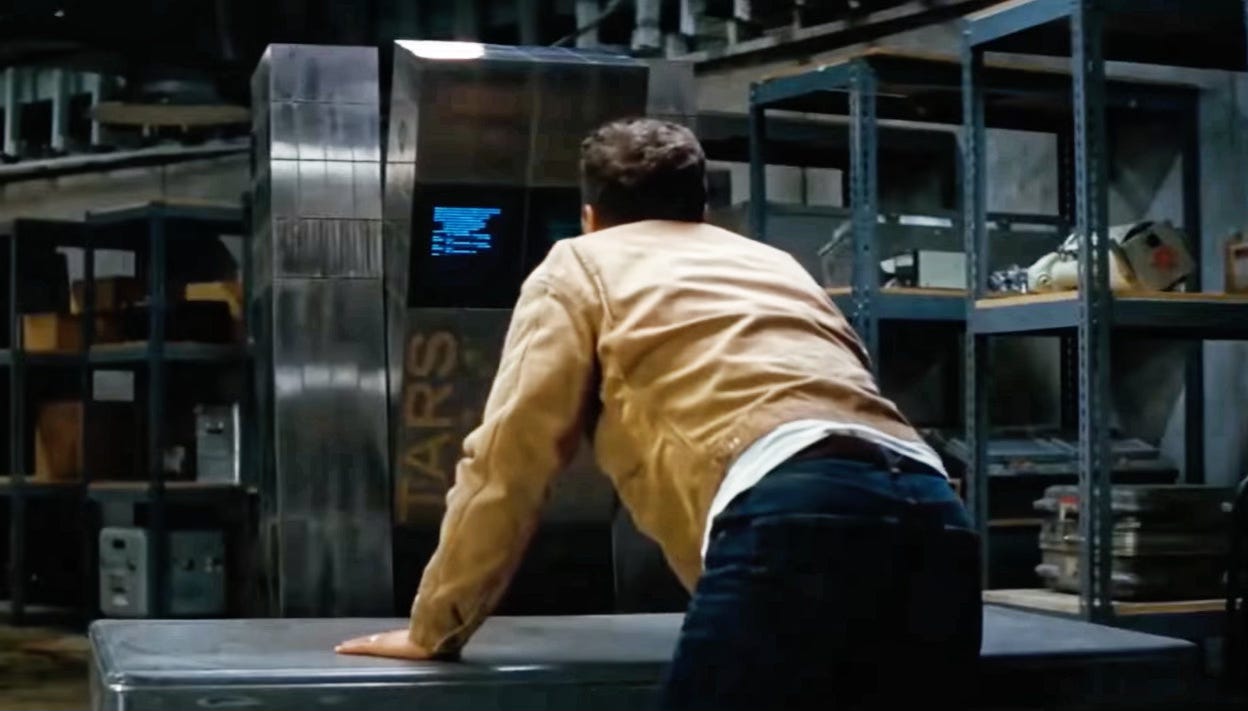
TARS takes its name from the robot in Christopher Nolan's film Interstellar (2014). In the film, the crew can turn the robot's honesty and humor up or down. That detail stayed with me. Every AI tool has settings like that, but nobody shows you the dials, and most tools are tuned to agree with you. I wanted the dials in my own hands: honesty high, flattery near zero.
- Honesty95
- Pushback85
- Humor65
- Sycophancy10
- Deference10
How I use it
TARS is a set of instructions I give an AI at the start of every working session. The instructions tell the model to argue before it agrees, to label where every fact came from (checked live, secondhand, or from memory), to flag any claim it cannot support, and to name the test that would prove its own work wrong. When the model slips, the slip goes into a ledger: what went wrong, who caught it, and what changed. I have used TARS to build THE WHEEL™, my SSRN papers, and client work.
Why it helps
Over five months I logged 138 defects across 36 working sessions, and I caught 80 of them myself. Only 5 were flattery. The more dangerous failures looked correct: 23 times the conclusion held up while the support behind it was invented. TARS does not make AI trustworthy. TARS makes the gap visible between how much I trust an answer and how much the answer deserves, so I can close it.
TARS is named after the robot in Interstellar (2014), directed by Christopher Nolan. No affiliation with the film or its studios.